







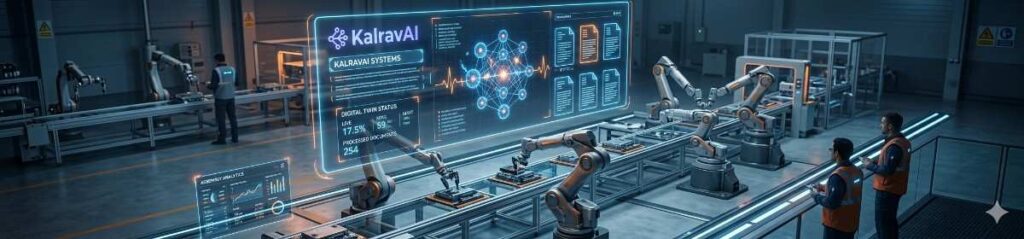
In modern industrial facilities, valuable operational knowledge is frequently trapped where it cannot easily be reached. Standard operating procedures (SOPs), equipment logs, troubleshooting histories, shift reports, and specialized expert insights are often scattered across isolated spreadsheets, outdated intranet sites, and physical manuals. For a factory worker standing on a noisy production floor, finding the exact technical documentation needed to fix a malfunctioning machine can take hours.
With the emergence of Industry 4.0 and advanced generative AI models, industrial leaders are shifting away from static databases. Manufacturing companies are aggressively deploying AI for internal knowledge management—transforming chaotic unstructured data into centralized, dynamic repositories of real-time insights.
1. Advanced Internal Search and Retrieval (Semantic Discovery)
Traditional internal keyword searches fail when workers do not type an exact technical phrase or part number. AI completely redefines this process through semantic discovery, leveraging Natural Language Processing (NLP) to understand the underlying context and user intent.
Instead of hunting through complex directory trees, an engineer can query an AI-powered conversational agent: “How do we resolve a pressure drop on a Component X assembly line?” The AI instantly cross-references decades of digitized technical records, maintenance logs, and past resolved support tickets. It then provides an accurate text summary alongside links to the specific pages of the relevant manuals—saving hours of manual tracking.
2. Streamlining Predictive Maintenance & Equipment Troubleshooting
When an industrial asset malfunctions, downtime costs can easily climb to tens of thousands of dollars per minute. Advanced facilities link AI-powered knowledge systems directly with shop-floor IoT sensors and predictive maintenance platforms.
When a machine sensor flags an anomalous vibration pattern, the AI doesn’t just alert the team; it proactively pairs the alert with the appropriate solution. The system automatically searches the internal knowledge base to draft an optimized remediation checklist. The incoming technician receives a precise summary detailing when this anomaly occurred in the past, how it was resolved, and which specific tools are required.
3. Rapid Onboarding and Training of Factory Workers
The manufacturing sector faces an accelerating skills gap as seasoned engineers retire, taking decades of specialized operational expertise with them. Capturing this tribal knowledge is critical.
AI-powered knowledge management tools streamline onboarding by generating dynamic, interactive training resources from complex engineering documents. Instead of reading through hundreds of pages of dry text, new hires can utilize custom internal chatbots to ask specific, scenario-based questions. These virtual assistants provide context-aware feedback and step-by-step guidance in multiple languages, significantly accelerating time-to-productivity for a globalized workforce.
4. Automated Data Ingestion and Knowledge Base Maintenance
Up to 80% of data generated within a manufacturing enterprise is entirely unstructured—consisting of hand-written shift logs, diagnostic images, engineering change orders, and audio recordings from the shop floor.
Modern AI systems use multimodal processing to ingest, tag, and categorize these highly diverse formats automatically. Furthermore, these systems continuously audit the information pipeline. AI can actively flag contradictory instructions, identify data gaps (e.g., highlighting a surge in technical queries about a newly installed assembly line asset that lacks thorough documentation), and notify subject matter experts to update obsolete data.
5. Integrating with Digital Twins for Operational Agility
Enterprise-scale innovators are successfully integrating AI-driven knowledge platforms with digital twins—virtual replicas of physical manufacturing ecosystems.
By analyzing massive datasets alongside live operational workflows, AI agents can run simulations to identify latent process inefficiencies. When an optimization is discovered, the AI compiles the insights directly into a fresh, updated draft for a new standard operating procedure. This shifts internal knowledge management from a passive recording tool into an active driver of operational agility and hyper-customization.
Implementing AI in manufacturing knowledge management represents a fundamental shift in how industrial operations scale. By unlocking unstructured data and deploying intuitive, context-aware internal tools, enterprises are protecting their institutional knowledge, drastically cutting unplanned downtime, and empowering their workforce to build a smarter, safer, and more collaborative factory floor.
FAQ
How does AI improve knowledge management in manufacturing?
AI uses natural language processing to instantly search unstructured documents, maintenance logs, and manual files to give workers immediate troubleshooting answers.
Can AI help reduce factory worker training and onboarding times?
Yes, new hires can query interactive internal AI chatbots to receive context-aware, step-by-step guidance and technical insights in multiple languages.
How do AI knowledge platforms interact with smart factory equipment?
They link directly with IoT sensor alerts to automatically surface historical repair data, schematics, and precise remediation checklists for technicians.
How does AI maintain accuracy across thousands of technical manuals?
The system automatically ingests, tags, and categorizes new documents while continuously flagging outdated data or conflicting operational procedures.