






In the early wave of digital transformation, businesses rushed to deploy basic chatbots. While those first-generation bots succeeded at answering simple FAQs, they quickly hit a wall when faced with dynamic, complex business processes. Modern enterprises need more than canned responses—they need operational execution.
This is where enterprise AI agents step in. Moving far beyond static Q&A systems, these autonomous digital assistants understand context, execute multi-step workflows, and integrate directly into your core tech stack to drive real business outcomes.
The Evolution: From Static Chatbots to Action-Oriented AI Agents
Traditional chatbots act like automated lookup tools. When a user asks a question, the bot matches keywords against a predefined database and spits back text.
Enterprise AI agents, on the other hand, behave like proactive team members. Powered by natural language understanding (NLU) and contextual reasoning, they don’t just converse they perform tasks:
- Contextual Awareness: They retain memory across conversations and adapt responses based on historical interactions.
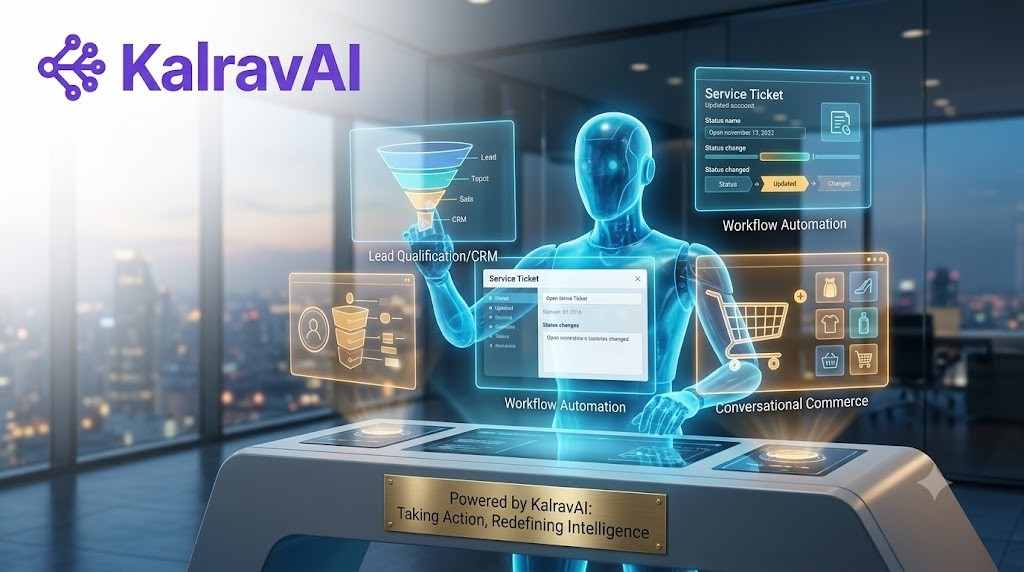
- Action-Driven Execution: Instead of telling a user how to resolve an issue, an agent creates the support ticket, updates the CRM, or processes the checkout directly.
- Continuous Learning: They adapt to new internal documentation, web sources, and user feedback over time without needing a full software re-build.
4 Ways Enterprise AI Agents Drive Value Across Business Units
1. Seamless CRM Integration & Lead Qualification
Instead of capturing static form submissions that sit idle in a inbox, an AI agent engages website visitors in real-time. It qualifies prospects based on custom rules, collects lead parameters, and instantly pushes structured data into systems like Zoho or Salesforce.
2. Conversational E-Commerce & Instant Checkout
Customer friction during product discovery directly causes abandoned carts. Enterprise AI agents guide shoppers through complex catalogs, recommend relevant products based on preferences, add items to the cart, and walk buyers through checkout naturally within the conversation interface.
3. Automated Ticket Management & Support
Support teams spend up to 40% of their day handling routine intake and routing. AI agents handle initial troubleshooting, gather relevant diagnostic information, tag priority levels, and generate support tickets automatically—freeing human experts to tackle high-value inquiries.
4. Custom Knowledge Training & Compliance Control
Modern AI solutions must strictly adhere to enterprise guidelines. By ingesting knowledge directly from company URLs, repositories, and documentation, agents stay accurate while adhering to strict behavioral guardrails, PII/PHI data masking, and corporate compliance standards.
Key Features to Look For When Deploying Enterprise AI Agents
When evaluating an AI agent platform for your business, ensure it provides:
| Feature | Strategic Importance |
|---|---|
| No-Code Deployment | Allows non-technical teams to train and launch agents in minutes rather than weeks. |
| Full UI/UX Control | Ensures the chat interface dynamically matches your brand’s visual identity, typography, and accessibility guidelines. |
| Multi-Platform Capabilities | Deploys seamlessly across web, mobile apps, and internal software without breaking existing workflows. |
| Enterprise Security | Requires end-to-end encryption, strict access permissions, and guaranteed privacy (ensuring company data is never used to train global third-party models). |
Getting Started: Scalable AI Implementation
Deploying enterprise AI agents doesn’t require tearing down your existing infrastructure. The most effective approach is modular:
- Identify High-Friction Touchpoints: Locate repetitive tasks in lead intake, customer support, or product search.
- Connect Knowledge Sources: Feed your agent relevant documentation, FAQs, and API endpoints.
- Set Operational Rules: Establish tone, response boundaries, and escalation protocols for human takeover.
- Monitor & Refine: Use user feedback loops and chat analytics to optimize agent performance over time.
By shifting from passive tools to action-oriented AI agents, businesses can deliver 24/7 engagement, eliminate operational bottlenecks, and turn routine conversations into measurable revenue growth.